The short version
Choose acrylic if glass-like clarity, a premium look, and neat milled or polished edges are important. Choose polycarbonate if it truly must not break. For everything in between, it is a trade-off between workability and budget.
- Acrylic: clearer (≥ 92% light transmission), more scratch-resistant, and easier to polish nicely
- Polycarbonate: up to 200× more impact-resistant, bendable without heating, flame-retardant
- Acrylic is more affordable per m²; polycarbonate costs more but does not break
- Both are UV-stable and suitable for outdoor applications
Impact resistance: polycarbonate wins, by a landslide
While acrylic can crack under a hard impact, polycarbonate deforms and springs back. That is why you see it used in machine guards, sports halls, and canopy roofs. For a trade fair display, that property is rarely needed—there, the crystal-clear look matters more.
“Our rule of thumb: can someone bump into it or can a ball hit it? Then polycarbonate. Does it need to mimic glass? Then acrylic.”
Edit and finish
Acrylic can be beautifully milled, laser-cut, and polished to crystal-clear edges — exactly why it is the standard for signs and displays. Polycarbonate does not laser-cut or polish well, but it can be cold-bent without breaking. That opens up shapes that are only possible with heat when using acrylic.
Price and availability
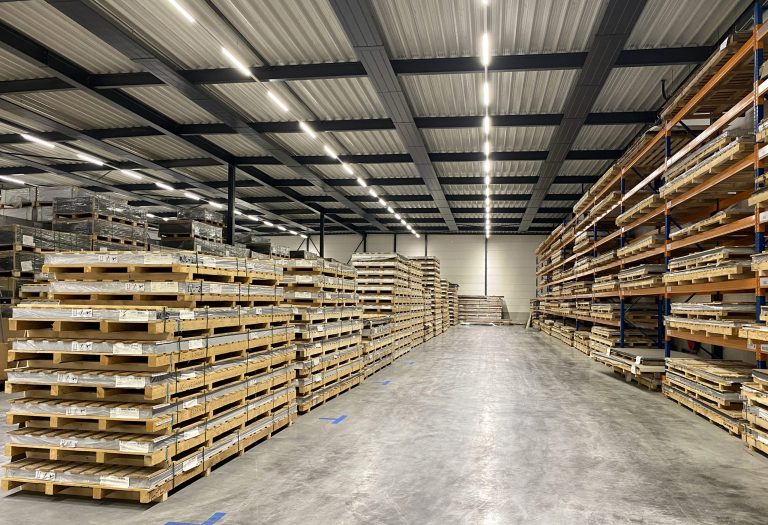
Acrylic is more economical per m² and we have it in stock in most thicknesses and textures. We keep polycarbonate in stock in the standard thicknesses; we order special versions upon request. When in doubt, request a sample — color and texture are best judged in person.