About Polycarbonaat (PC)
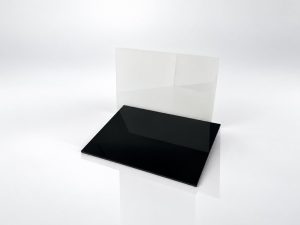
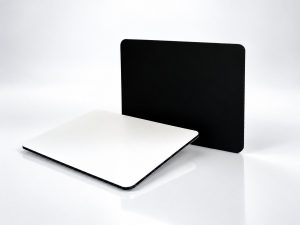
All About Polycarbonaat (PC)Polycarbonate, also known as Lexan, Impex, Arla, Barlo PC, or Makrolon, is distinguished from other plastic sheet materials by its combination of optical clarity and extremely high impact resistance. It is a practically unbreakable sheet that can be cold-bent and folded. Its strength is a remarkable 250 times greater than glass of the same thickness.
With a UV-stabilized protective surface and low moisture absorption, the panels are exceptionally well suited for outdoor applications. Polycarbonate has excellent flame-retardant properties and is the only crystal-clear plastic that retains its properties at low temperatures down to −30 °C.
These unique properties, together with high clarity and rigidity, make polycarbonate extremely suitable as safety glazing in schools, sports halls, and in locations where break-ins and vandalism are a factor. Further applications include machine guards and sheets, display cases, skylights, canopy panels, light box panels, and the aviation industry.
Specifications
| Material | Polycarbonate (PC) |
|---|---|
| Also known as | Lexan, Makrolon, Impex, Arla |
| Impact resistance | 250x stronger than glass |
| Max sheet size | 3050 × 2050 mm |
| Thicknesses | 2 – 15 mm |
| Heat-resistant | -30 to +120 °C |
| UV-resistant | Yes (UV-stabilized), suitable for outdoor use |
| Brand behavior | Self-extinguishing, excellent flame retardant |
| Editable | Cold bending, sawing, milling, gluing, welding |
| Specific gravity | 1.2 kg/m²/mm |
Properties
- Virtually unbreakable
- Suitable for intensive use
- Resistant to higher temperatures
- Self-extinguishing
- Cold bendable
- Specific weight 1.2 kg/m²/mm
- More scratch-sensitive than glass
- More expensive than acrylate and PET-G
Applications
- Safety glass in schools and sports halls
- Machine guards and protective covers
- Skylights and canopy panels
- Light box panels and display cases
- Vandal-resistant applications
- Applications with high scratch resistance without coating
- Contact with aggressive solvents
Downloads
Alternatives for this product
Frequently asked questions about this material
What is the difference between polycarbonate and acrylate?
Polycarbonate is much more impact-resistant (virtually unbreakable) and can be cold-bent; acrylic is clearer, easier to polish, and more scratch-resistant. For safety glazing, choose polycarbonate; for optical applications, acrylic.
Is polycarbonate suitable for outdoor use?
Yes, thanks to the UV-stabilized surface and low moisture absorption, the panels are ideally suited for outdoor applications such as awnings and skylights.
Can polycarbonate be cold bent?
Yes, polycarbonate can be cold-bent and brake-formed, which is unique among transparent plastics. Hot bending for tighter radii is also possible.
How strong is polycarbonate?
The strength is no less than 250 times higher than glass of the same thickness. Therefore, it is used as safety glazing where burglary and vandalism play a role.
Which versions are available from stock?
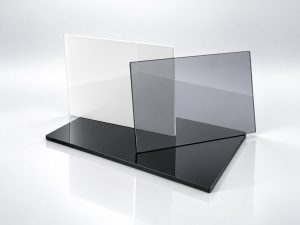
Clear in 2 to 15 mm, opals in 2 to 6 mm and smoke in 3 to 6 mm, all in 3050 × 2050 mm. Deviating colors, thicknesses and formats on request.
Is polycarbonate fire-resistant?
Yes, polycarbonate is self-extinguishing and has excellent flame-retardant properties.